
Across the globe, and especially here in the United States, politicians and public discourse are increasingly fixated on factories. The dream of reviving mid-century manufacturing glory has captured the imagination of many promising, well-paid jobs and national strength. But beneath the surface of this nostalgic vision lies a troubling question: are we clinging to a myth that could actually undermine our future prosperity?
The True Cause of Factory Job Loss
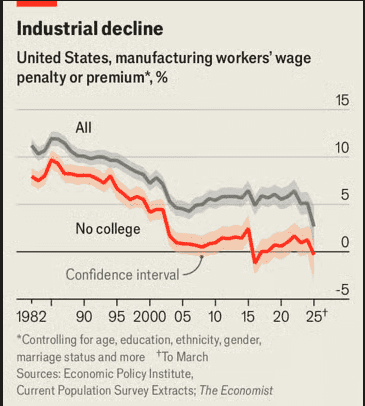 It’s a common misconception that America’s manufacturing jobs were lost to foreign trade and imports. In truth, most of these jobs were displaced by automation and technological advances. Modern manufacturing is now a low-margin, low value-add sector, traits that make it better suited for developing economies.
Consider this: even if the U.S. completely eliminated its trade deficit, the impact on employment would be modest at best – just a 1% boost to the workforce. Worse yet, the average cost to create these jobs through tariffs would be a staggering $200,000 per position, while the median pay would hover around just $50,000. The math simply doesn’t add up.
The High Cost of Onshoring
Talk of reshoring production, like bringing iPhone manufacturing stateside, often ignores a critical reality: costs would skyrocket. Some estimates suggest that U.S.-made iPhones would retail for over $3,500. Not surprisingly, the government quietly walked back proposed tariffs on such products.
Beyond the sticker shock, there’s a deeper economic consequence. When we import products from other nations, we create demand abroad for American goods and services in return, particularly in areas where we remain global leaders, such as aerospace (think Boeing), advanced consulting, and high-end tech. Attempting to “bring it all back home” would sever those symbiotic ties.
Why Protectionism Fails
History has shown that protectionism backfires. Shielding local firms from competition may feel patriotic, but it leads to bloated inefficiency, higher consumer prices, and ironically, job losses. We’ve seen this movie before: the auto industry bailouts of the 1970s through the 1990s provide a cautionary tale of short-term fixes with long-term costs.
Protecting supply chains makes sense, but the smarter move is collaboration with reliable international partners. Sharing expertise and developing interdependent systems is a proven strategy that fosters both resilience and prosperity.
Betting on the Future, Not the Past
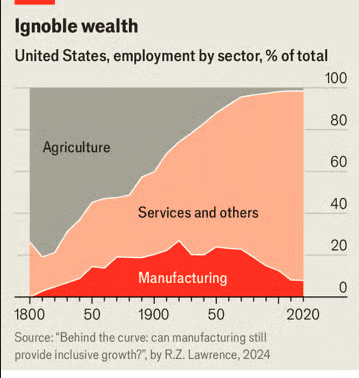 Rather than resurrecting the factory floor, we should focus on where value is truly being created today: services, skilled trades, and technology. Fields like healthcare, finance, consulting, and skilled labor are not only growing, they offer better pay, greater flexibility, and higher margins than manufacturing.
Contrary to the stereotype, service-sector jobs are not synonymous with minimum wage. In fact, many of the best-paid roles in the U.S. are in high-skill services. The demand for skilled trades alone is expected to grow by 5% or more over the next decade – five times the potential impact of reshoring efforts.
The Real Disruption Is Coming from Technology
While the conversation is dominated by foreign competition, the greater threat to jobs is domestic, and it’s already underway. Artificial intelligence, automation, and robotics will displace a vast number of roles in the coming years.
Consider this: within 15 years, it’s projected that 65% of cars in the U.S. will be fully autonomous. That spells the end for millions of taxi, Uber, and truck drivers, currently the single most common job in America. And it has nothing to do with outsourcing.
Preparing for the Transition
Investors, workers, and policymakers alike must face a hard truth: we’re not fighting trade wars, we’re navigating a technological revolution. This shift will cause real disruption over the next two decades, particularly for mid-career workers who may struggle to retrain.
Yet, there is hope. History tells us that every wave of innovation ultimately creates more and better jobs than it destroys. The Industrial Revolution, the rise of computers, and the internet all brought profound change, but also higher living standards in the long run.
The challenge ahead is managing the transition, not resisting progress. Let’s stop chasing yesterday’s jobs and start preparing for tomorrow’s economy.
If you have questions about anything discussed here, please reach out to me. We wish you the best of investing success!
Best,
Paul J. Carroll, CFP®
CEO & Founder, Avion Wealth
For educational purposes only. Consult your financial advisor.
Resources
Financial Times: Nostalgia for manufacturing will make the US poorer
The Economist: Factory work is overrated. Here are the jobs of the future.
The Economist: The word must escape the manufacturing delusion