
Private equity can be an attractive component of a well-diversified portfolio, especially for business owners and high-net-worth families seeking long-term, tax-efficient growth. However, many first-time investors are caught off guard by how underwhelming early performance can look, even in a strong fund. Understanding why requires a closer look at a concept known as the “J-curve effect.”
What Is the J-Curve?
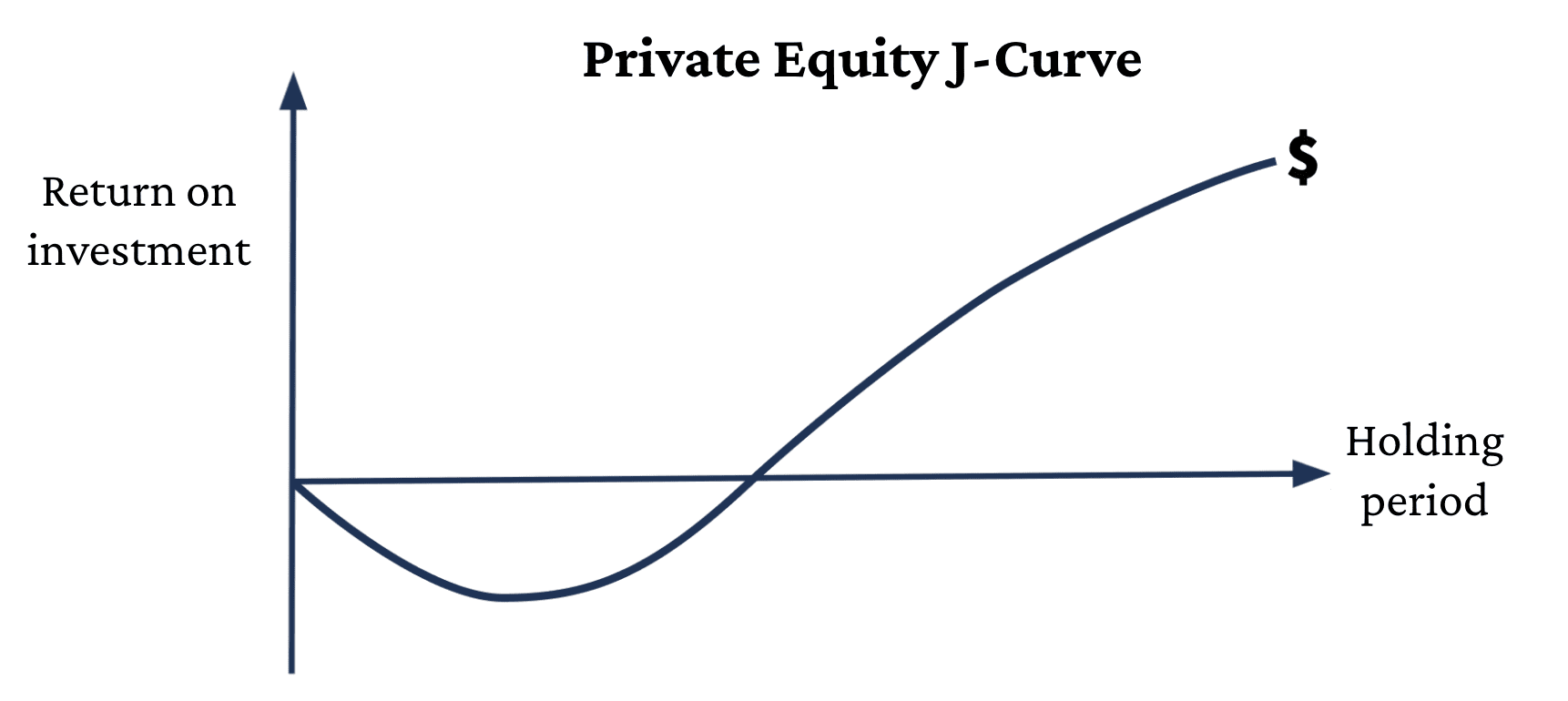
The J-curve refers to the typical performance pattern of a private equity investment over time. In the early years, returns often dip into negative territory before rising sharply in later stages. This creates a curve shaped like the letter “J.”
The reasons for this early dip are structural. Private equity funds generally front-load fees and expenses. These include management fees, setup costs, and other fund-level charges that impact performance from day one. Meanwhile, capital is deployed gradually as investment opportunities arise. This means that during the initial years, investors are seeing costs before any meaningful returns have had a chance to develop.
Timing and Expectations Matter
These dynamics are not a sign of trouble, they’re simply how the math works in private equity. Returns are often back-weighted, with meaningful exits and business growth typically occurring around years five through seven. By then, the portfolio companies have had time to mature, and early investments may begin to yield substantial gains.
This timing mismatch can lead some investors to second-guess their allocation. It’s not uncommon to see early withdrawals or loss of confidence just as the investment is poised to begin its upward trajectory.
Not All Deals Are Equal
It’s important to note that private equity isn’t inherently right for everyone. And not every private equity opportunity is created equal. In fact, lower-quality deals are often marketed more aggressively, which can make due diligence especially critical.
Evaluating the structure, strategy, and team behind a private equity fund is essential. A compelling pitch is no substitute for a sound investment thesis and aligned incentives.
Exploring the Right Fit
For those already allocated to private equity or considering a new opportunity, it can be helpful to step back and view the investment through the lens of your broader financial strategy. A complimentary second opinion can provide clarity, not sales pressure.
Avion Wealth regularly supports business owners, executives, and families in evaluating complex investment decisions, including private equity. If you’re weighing whether an opportunity is the right fit, consider reaching out for a Complimentary Discovery Call.
To your success,
The Avion Wealth Team